

In the PS5 vs PS5 Pro decision, the standard PS5 is the better buy for most people, and the Pro only makes sense if you own a high-end 4K TV and care about getting the sharpest, most stable image possible. The Pro packs a much faster GPU and Sony’s AI upscaling, but it costs a lot more, ships without a disc drive, and uses the same processor as the regular console. After the 2026 price increases, that gap is wider than it was at launch, which changes the math for a lot of buyers. Here’s exactly what the extra money gets you, and who should actually spend it.
The quick verdict
Buy the PS5 Pro if you have a 4K display with 120Hz support, play a lot of big-budget single-player games, and want the cleanest visuals PlayStation can produce — especially if you keep consoles for five-plus years and want headroom for demanding future titles.
Stick with the standard PS5 if you game on a 1080p or 4K/60Hz TV, care more about the library than maxed-out fidelity, or you’re watching your budget. It runs the same games beautifully.
The main risk with the Pro is paying a premium you can’t actually see. Without a high-quality 4K/120Hz panel, most of the Pro’s advantage is invisible. Before buying, check three things: your TV’s resolution and refresh rate, whether the games you play are “Pro Enhanced,” and — if you already own a PS5 — whether you’re genuinely unhappy with how it performs.
Price: the gap widened in 2026
Price is where this comparison gets sharp, because Sony raised console prices again in 2026. As of 2026, after the April increase, US pricing sits well above the old launch figures, and the Pro carries a steep premium on top.
| Model (US / UK, 2026) | Price |
| PS5 Digital Edition | $599.99 / £519.99 |
| PS5 (Disc) | $649.99 / £569.99 |
| PS5 Pro (digital-only) | $899.99 / £789.99 |
Two hidden costs make the Pro pricier than the table suggests. It ships without a disc drive, so if you own physical games or want cheaper used discs, add roughly $79 / £99 for the official drive. A vertical stand is also sold separately. That pushes the real-world gap between a disc-based standard PS5 and a fully-equipped Pro past $300 in the US. Watch for Black Friday discounts, which have historically shaved a chunk off PlayStation hardware, but don’t expect the Pro to approach standard-PS5 money.
Specs compared, and what actually matters
On paper the Pro looks like a generational leap, but the upgrades are concentrated in graphics, not everything.
| PS5 | PS5 Pro | |
| CPU | AMD Zen 2, 8-core @ 3.5GHz | Same AMD Zen 2, 8-core |
| GPU | 10.28 TFLOPs | 16.7 TFLOPs |
| RAM | 16GB GDDR6 | 18GB GDDR6 |
| Storage | 1TB SSD | 2TB SSD |
| Ray tracing | Standard | Advanced |
| AI upscaling | None | PSSR |
| Wi-Fi | Wi-Fi 6 | Wi-Fi 7 |
The headline is the GPU. On raw numbers it’s about 62% more graphics power, though Sony frames the real-world gain as closer to 45% faster rendering, which is the figure that matters once games are actually running. The catch is the CPU: it’s identical on both consoles, so anything bottlenecked by processing — physics, AI, simulation-heavy games — won’t speed up. The Pro is a graphics upgrade, not a faster computer.
The other genuinely useful upgrade is storage. Modern games regularly run 100GB or more, and the Pro’s 2TB SSD holds roughly twice as many before you’re deleting things. Wi-Fi 7 is a minor bonus that only helps if you own a Wi-Fi 7 router, and even then the difference is small.
What the Pro actually improves in games
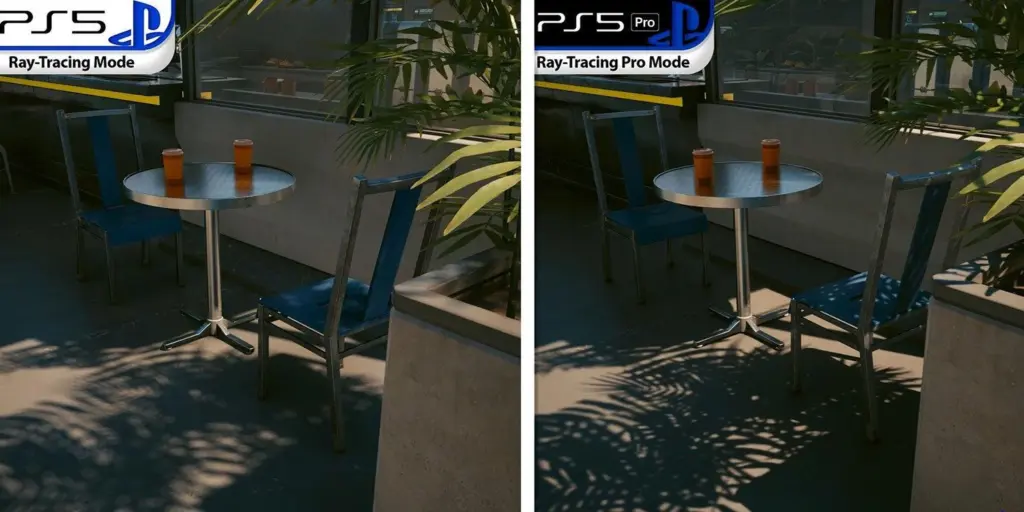
The reason to pay more is PSSR — PlayStation Spectral Super Resolution, Sony’s AI upscaling, essentially its answer to Nvidia’s DLSS. It reconstructs a sharper image at higher frame rates than the hardware could manage natively, and it’s the engine behind the Pro’s visual edge.
That edge only shows up fully on Pro Enhanced titles, of which there are over 100, including Marvel’s Spider-Man 2, Final Fantasy 7 Rebirth, Death Stranding 2 and Battlefield 6. On those games you get a cleaner image, steadier frame rates and better lighting. A clear example of the difference: on the standard PS5, running The Witcher 3 in 4K with ray tracing forces a harsh trade-off — drop the resolution or turn ray tracing off, because the frame rate tanks. The Pro can hold both at once. That “no compromise” experience is the core pitch.
For games that aren’t Pro Enhanced, the extra GPU still helps, but the gains are modest rather than dramatic. And none of it lands without the right screen. On a 4K/120Hz display the jump in sharpness and stability is obvious; on a 1080p or 60Hz TV, you’re paying for detail the panel can’t show.
Design, ports and storage
The Pro borrows the look of the existing PS5 family with a matte finish that makes it the best-looking of the bunch, but design alone is no reason to upgrade. Oddly, despite shipping without a disc drive, the Pro is about as large as the original PS5 — so it’s not the space-saver the missing drive might suggest. The Slim, by contrast, is roughly 30% smaller in volume, which matters if your TV unit is tight.
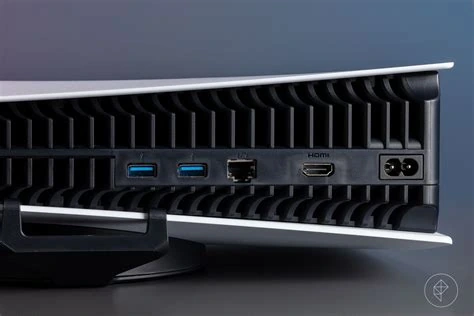
Connectivity is identical across both: two USB-C ports up front, two USB-A, HDMI 2.1 and Ethernet at the back. So you’re not gaining or losing any inputs by choosing one over the other — the decision stays about performance and price, not ports.
Should you upgrade from a standard PS5?
If you already own a PS5, the honest answer for most people is no. The Pro is a mid-generation refresh, not a new console generation, and its benefits are concentrated in image quality on premium displays. Unless you’re actively frustrated with how your PS5 performs and you own a high-end 4K/120Hz TV, the upgrade cost is better spent elsewhere — on games, a better screen, or storage.
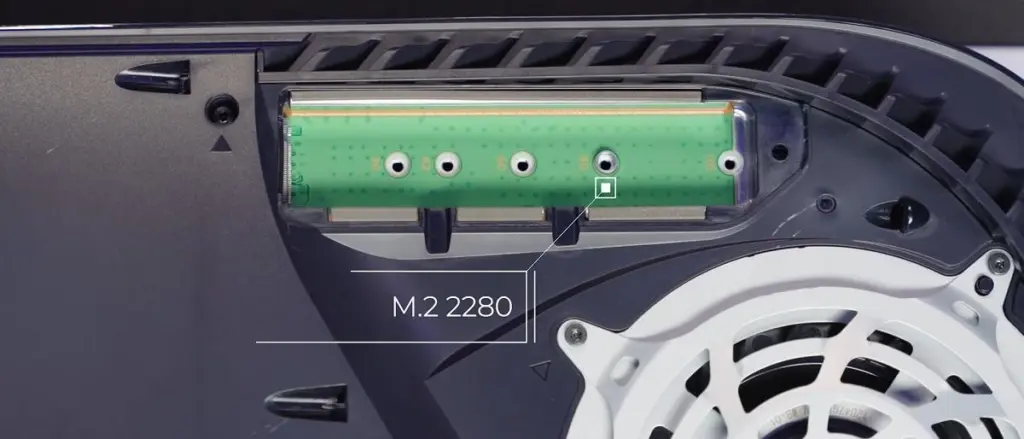
Speaking of storage: if the 2TB is the main draw, remember a base PS5 takes an internal M.2 SSD upgrade, which is far cheaper than buying a whole new console. Your saves, library, trophies and settings all transfer to a Pro if you do switch, so nothing is lost — but “nothing lost” isn’t the same as “money well spent.”
Does the PS5 Pro play all PS5 games?
Yes. It runs the entire PS5 library, and the same discs (with the add-on drive) and downloads work. Pro Enhanced titles simply look better; everything else plays as normal.
Is the disc drive included with the Pro?
No. The Pro is digital-only out of the box. Physical-media players need to buy Sony’s official disc drive separately.
How to make the call
Let your display and your budget decide. On a 4K/120Hz TV with a habit of playing graphically ambitious games, the PS5 Pro earns its premium and rewards you with the best version of those titles. On anything less than that screen — or with a tighter budget — the standard PS5 delivers the same games and the better value, and you won’t feel like you’re missing much. Buy the Pro for the display you already own, not the one you might get someday.
