

The best Assassin’s Creed game depends on what you want from the series: stealth, historical atmosphere, naval freedom, RPG scale, or a focused classic-style assassination loop. If we are ranking the series as a whole, Assassin’s Creed Odyssey takes the top spot for its huge world, choice-driven structure, combat flexibility and long-term replay value.
That does not mean every fan will agree. Assassin’s Creed II remains the cleanest example of the classic formula. Black Flag is still the pirate fantasy the series never fully repeated. Origins rebuilt the franchise. Mirage brought back older stealth priorities. Shadows pushed the RPG side into feudal Japan with two very different protagonists. This ranking weighs story, world design, mission variety, stealth, combat, historical setting, and how well each game represents the Assassin’s Creed identity.
Ranking Criteria: What Makes the Best Assassin’s Creed Game?
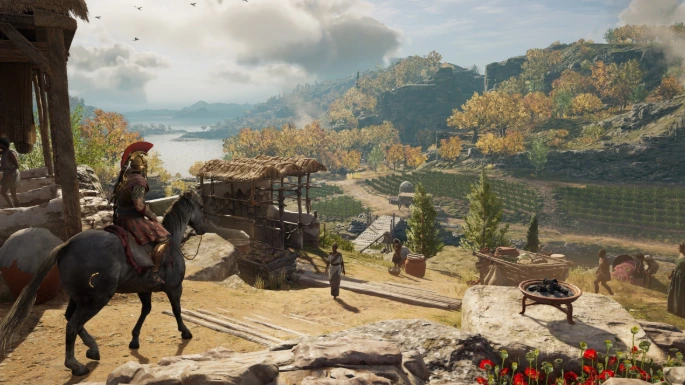
A good Assassin’s Creed game is not just a big map with towers. The best entries make their historical setting feel alive, give the protagonist a strong reason to move through that world, and make assassination, exploration and progression work together instead of competing for attention.
For this ranking, the strongest games needed at least three things: a memorable setting, a satisfying core loop and a clear identity. Some older titles are rough today but still important. Some modern entries are technically stronger but carry bloat. Spin-offs were judged more carefully because a smaller game can still be valuable if it understands what it is trying to do.
24. Assassin’s Creed Altaïr’s Chronicles
Altaïr’s Chronicles sits at the bottom because it strips Assassin’s Creed down without replacing that lost depth with anything meaningful. The idea of a mobile prequel sounds interesting, but the simplified combat, stiff environments and awkward storytelling make it hard to recommend now.
Its best quality is historical curiosity. It shows how early Ubisoft tried to shrink the Creed formula for portable play. As an actual game, it feels thin, repetitive and far removed from what made the original Assassin’s Creed intriguing.
23. Assassin’s Creed Identity
Identity tried to bring a more console-like Assassin’s Creed experience to mobile, with custom assassins and short missions set in Renaissance Italy. On paper, that should work.
The problem is control and atmosphere. Movement feels unreliable, missions become disposable, and the world lacks the density that makes rooftop stealth enjoyable. It is more interesting as a mobile experiment than as a strong Assassin’s Creed entry.
22. Assassin’s Creed II: Discovery
Discovery is a better portable game than many early spin-offs, but it is still a side-scrolling Ezio adventure with limited depth. The platforming is smoother than expected, and it moves quickly enough to stay playable in short sessions.
Its weakness is that it rarely feels essential. The missions are simple, the story is light, and the game mostly works as a small companion piece for fans who already love Ezio.
21. Assassin’s Creed Bloodlines
Bloodlines deserves credit for trying to bring a 3D Assassin’s Creed experience to PSP. It continues Altaïr’s story and looks closer to the mainline games than expected for the hardware.
Still, the environments are cramped, combat lacks elegance, and mission design often feels like a compromise. Maria adds some personality, but not enough to carry the whole game.
20. Assassin’s Creed Chronicles: Russia
Chronicles: Russia has one of the most striking visual styles in the franchise, using bold propaganda-inspired art to support its 1918 setting. Nikolai Orelov also gives the game a distinctive modern-era flavor.
Unfortunately, the difficulty spikes hurt the experience. The best stealth challenges feel tense, but the harsher timed sections and punishing fail states make the game feel less refined than Chronicles: China.
19. Assassin’s Creed Chronicles: India
Chronicles: India has beautiful backgrounds, strong movement and a setting the series has rarely explored. Arbaaz Mir’s adventure should have been a standout side story.
It falls short because the structure is too narrow. Combat is discouraged, exploration is limited, and the pacing can become frustrating. The art carries a lot of weight, but the game never fully uses its setting.
18. Assassin’s Creed Pirates
Pirates is not a full Assassin’s Creed game in the traditional sense. It takes the ship combat appeal of Black Flag and builds a mobile-focused experience around it.
That limited scope is both its weakness and its strength. It does not offer deep stealth, parkour or historical immersion, but its naval battles are simple, readable and surprisingly effective for mobile play.
17. Assassin’s Creed Freedom Cry
Freedom Cry began as Black Flag DLC, but its story gives it a stronger identity than many larger spin-offs. Adéwalé’s fight against slavery in Saint-Domingue gives the Assassin mission a sharper moral frame.
Mechanically, it remains close to Black Flag without reaching the same breadth or freedom. Yet its theme, protagonist and direct treatment of liberation make it one of the most meaningful smaller entries in the franchise.
16. Assassin’s Creed III
Assassin’s Creed III has ambition everywhere. It introduces Connor, the American Revolution, the Frontier, homestead systems and early naval combat. Some of those ideas later became crucial to the series.
The problem is execution. Connor can feel emotionally distant, the stealth is uneven, and the mission design often works against the fantasy of being an assassin. It is important, but not as satisfying as it should be.
15. Assassin’s Creed Liberation
Liberation has one of the series’ most interesting protagonists in Aveline de Grandpré. Its persona system is a smart idea, letting Aveline move through society differently depending on how she presents herself.
The game still carries its handheld origins. The world feels smaller, the story lacks focus, and the best ideas are not developed deeply enough. It is worth playing for Aveline, but not one of the strongest overall entries.
14. Assassin’s Creed Rogue
Rogue is often described as Black Flag’s colder sibling, and that is fair. It reuses much of Black Flag’s structure but shifts the perspective to Shay Cormac, an Assassin who becomes a Templar.
That reversal is the reason Rogue still matters. Being hunted by Assassins adds tension, and the North Atlantic setting gives the familiar naval systems a harsher tone. It is not bold mechanically, but it is more than a simple retread.
13. Assassin’s Creed
The original Assassin’s Creed is repetitive by modern standards, but its core idea remains powerful. Investigate a target, learn the city, plan the kill, escape into the crowd. That loop is still the purest version of the Assassin fantasy.
Its age shows in mission variety, pacing and controls. Even so, it deserves respect because the atmosphere of the Crusades-era cities and the philosophical conflict between Assassins and Templars still define the series.
12. Assassin’s Creed Chronicles: China
Chronicles: China is the best of the side-scrolling entries. Shao Jun’s story is compact, stylish and built around stealth more intelligently than the other Chronicles games.
The brushwork-inspired visual style gives it personality, while the level design supports quiet movement and quick execution. It cannot match a full open-world entry, but as a smaller stealth game, it understands the assignment.
11. Assassin’s Creed Unity
Unity had a rough launch, but its reputation has improved because the underlying design is stronger than the early technical problems suggested. Paris is still one of the most impressive cities Ubisoft has built.
The assassination opportunities are the real highlight. Unity gives players more ways to approach major targets, making stealth feel planned rather than scripted. The story is not the series’ best, but the city, parkour and assassination design make it worth revisiting.
10. Assassin’s Creed Revelations
Revelations works best as a farewell. Older Ezio, the return of Altaïr’s legacy and the Constantinople setting give the game a reflective tone that few entries attempt.
Not every system lands. The tower defense mechanic is weak, and the city is less memorable than Florence, Venice or Rome. Yet the emotional payoff is strong. For players invested in Ezio, Revelations is essential.
9. Assassin’s Creed Brotherhood
Brotherhood could have felt like a smaller sequel to Assassin’s Creed II. Instead, it became one of the most important classic entries.
Rome is dense, varied and full of useful distractions. Recruiting assassins changes the power fantasy, and the city liberation structure gives progression a satisfying rhythm. It may not have the freshness of Assassin’s Creed II, but it is sharper and more confident in several systems.
8. Assassin’s Creed Mirage
Mirage is valuable because it remembers that Assassin’s Creed can work without an enormous RPG map. Basim’s journey through Baghdad brings back tools, social stealth, pickpocketing, focused assassination contracts and denser city navigation.
It is not as expansive as the biggest entries, and that is the point. Mirage is for players who missed the older style and wanted a tighter game built around stealth and parkour. It is not the best in the series, but it is one of the clearest statements of identity Ubisoft has made in years.
7. Assassin’s Creed Syndicate
Syndicate is the most entertaining of the post-Ezio classic-style games. Victorian London gives the series a lively industrial playground, while Jacob and Evie Frye bring a lighter, more playful energy.
The rope launcher changes traversal dramatically, making the city faster to move through even if it softens some parkour challenge. Syndicate’s strength is momentum: gang fights, train hideouts, mysteries and character banter keep it moving.
6. Assassin’s Creed Valhalla
Valhalla is massive, sometimes too massive, but its strengths are hard to ignore. Eivor’s saga gives the series a different rhythm, blending settlement building, regional alliances, raids, mythology and Hidden Ones lore.
Its biggest issue is size. The campaign can feel stretched, and not every region carries the same weight. Still, when Valhalla works, it feels rich, dramatic and personal. It is one of the best games for players who want a long RPG journey rather than a compact stealth adventure.
5. Assassin’s Creed Shadows
Shadows earns a high place because it gives players two different approaches inside one of the most requested settings in the series. Naoe supports stealth, agility and infiltration, while Yasuke brings direct strength and heavier combat.
Feudal Japan also gives the game a strong visual and mechanical foundation. Castles, seasonal changes, weather and different enemy spaces make stealth more dynamic than in several recent entries. The story may not land with the same force as the best narratives in the series, but the open world and dual-protagonist structure make Shadows one of the strongest modern Assassin’s Creed games.
4. Assassin’s Creed Origins
Origins saved the franchise from fatigue. Ancient Egypt is not just a backdrop; it is the star. Deserts, cities, tombs, temples and the Nile give the world a sense of scale and mystery that still holds up.
Bayek is also one of the series’ strongest protagonists. His grief, warmth and anger make the origin story of the Brotherhood feel human rather than purely mechanical. The RPG systems are not as deep as Odyssey’s, but Origins is more focused and emotionally grounded.
3. Assassin’s Creed IV: Black Flag
Black Flag is the best pirate game Ubisoft ever made and one of the best Assassin’s Creed games because it bends the formula without breaking it. Edward Kenway begins outside the Assassin ideology, which makes his eventual connection to the larger conflict more satisfying.
The naval exploration is still excellent. Sailing, upgrading the Jackdaw, hunting ships, diving wrecks and exploring islands create a sense of freedom the series rarely matches. It is not the purest Assassin game, but it is one of the most enjoyable.
2. Assassin’s Creed II
Assassin’s Creed II is the classic answer to the best Assassin’s Creed game question. It improves almost everything from the original: mission variety, protagonist, cities, combat, progression, side activities and emotional stakes.
Ezio is the reason it still matters. Watching him grow from reckless young nobleman into committed Assassin gives the game a personal arc that many later entries chase but do not equal. Florence and Venice remain iconic, and the Renaissance setting still feels tailor-made for the series.
If you want the most balanced classic Assassin’s Creed experience, Assassin’s Creed II is still the safest recommendation.
1. Assassin’s Creed Odyssey
Odyssey takes first place because it is the richest version of Assassin’s Creed as an open-world RPG. It is not the most traditional Assassin game, but it is the most complete adventure in the series.
Ancient Greece is huge, colorful and full of stories. Kassandra, in particular, gives the game a charismatic center, and the choice-driven structure makes quests feel more personal than the older linear entries. Combat is flexible, gear matters, abilities change how you approach fights, and the world supports exploration for dozens of hours without losing its appeal.
Odyssey’s biggest weakness is also obvious: it moves far from the classic Assassin fantasy. Players who want tight stealth and city-based assassination may prefer Assassin’s Creed II, Unity or Mirage. But for scale, freedom, character, customization and long-term play, Odyssey is the best Assassin’s Creed game overall.
Which Assassin’s Creed Game Should You Play First?
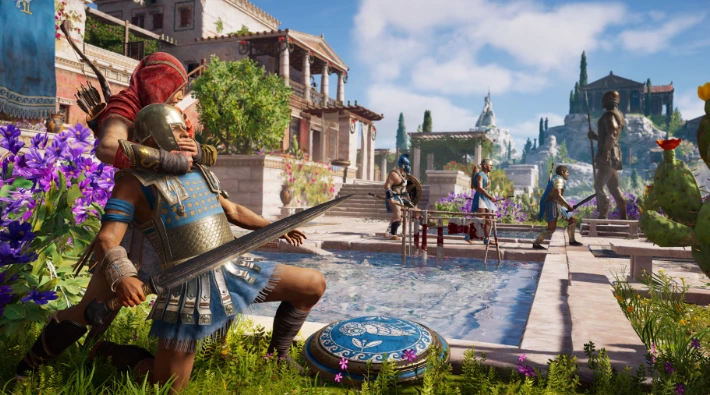
New players should not automatically start with the first release. If you want classic Assassin’s Creed, start with Assassin’s Creed II. If you want a modern RPG, start with Origins or Odyssey. If you want pirates, start with Black Flag. If you want a shorter stealth-focused game, Mirage is the easiest modern entry point.
The best route depends on taste:
| Player type | Best starting point |
| Classic stealth fan | Assassin’s Creed II |
| Open-world RPG fan | Assassin’s Creed Odyssey |
| Pirate adventure fan | Assassin’s Creed IV: Black Flag |
| Modern stealth fan | Assassin’s Creed Mirage |
| Historical exploration fan | Assassin’s Creed Origins |
| Feudal Japan fan | Assassin’s Creed Shadows |
The series is too varied for one universal starting point. That variety is exactly why ranking Assassin’s Creed games is difficult — and why the franchise has lasted so long.
The Final Pick
If you ask for one answer, the best Assassin’s Creed game is Assassin’s Creed Odyssey. It offers the strongest mix of world scale, player choice, combat depth, memorable quests and replay value. If you want the purest classic formula, choose Assassin’s Creed II. If you want the most purely fun adventure, choose Black Flag.
That is the real strength of Assassin’s Creed in 2026: the series no longer has one shape. It can be stealth, RPG, pirate fantasy, historical tourism, revenge story or character saga. The best game is the one that matches the version of Assassin’s Creed you actually want to play.
